10 Intrestin benifits of arguls

Some of the health benefits of arugula include a lowered risk of cancer, healthy bones, and improved eyesight. It has antioxidant properties and is good for healthy skin. It also helps in strengthening the brain, improving metabolic functions, mineral absorption, and boosting the immune system. Arugula is beneficial for weight management as well.
Arugula is a leafy green plant that is packed with vitamins, minerals, and antioxidants. It is a good dietary choice for a healthier body and keeping your mind clear and focused. To the untrained eye, it might just look like fancy lettuce, but not all greens are made equal, and arugula has a wide range of health benefits that frequent eaters of this cruciferous vegetable can enjoy.
Arugula has a number of different names depending on what area of the world you are in. These various names include garden rocket, rucola, roquette, and colewort. All the names probably stem from the Latin base eruca. It belongs to the genus Eruca and the family Brassicaceae. It is closely related to radishes, kale, and cauliflower. It is grown both on a large scale for commercial consumption, but also exists as a wild species throughout the world. Arugula can be found all over the world, although it is predominantly used in the Americas, Europe, and North Africa.
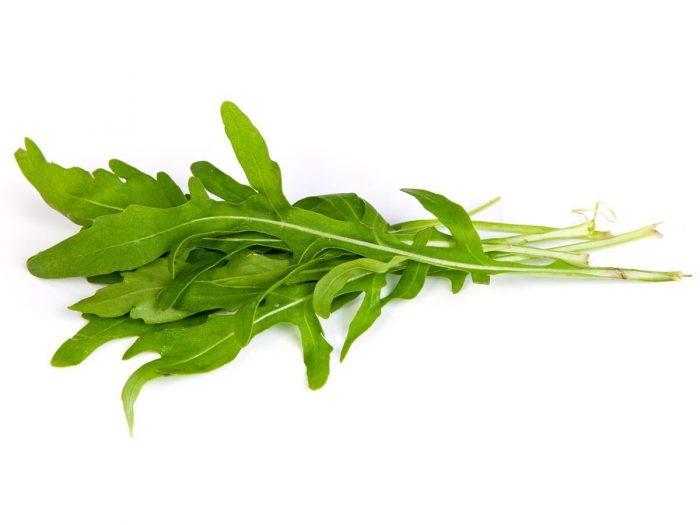
Arugula grows to a height of 20-100 centimeters, and is recognizable by its small, white flowers. The leaves, which are the primary food source of arugula, are lobed in nature, with 4-10 lateral lobes and a longer terminal lobe.
Nutritional Value Of Arugula
Arugula contains high levels of folic acid and antioxidants like vitamin C, vitamin K, and vitamin A, which makes it integral in the fight against free radicals. It is packed with carotenoids, as well as many other minerals like potassium, manganese, iron, and calcium, all of which are beneficial and necessary elements in a person’s diet.
Arugula contains phytochemicals, which are beneficial in preventing cancer. It is also superior to some other leafy greens because unlike those other varieties, arugula is low in oxalates, which are chemicals that actually inhibit the absorption of minerals into the body. Although not a direct linkage, arugula is a low-calorie and nutrient-rich food as well.
Health Benefits Of Arugula
The vitamins, minerals, phytochemicals and antioxidants packed into every leaf of arugula are certainly a benefit to those healthy eaters who incorporate it into their diet.
 Antioxidant Properties: Arugula is a great source of antioxidants and can greatly increase a person’s ORAC value (Oxygen radical absorbance capacity), which is a measurement of antioxidant strength. Antioxidants function to maintain a healthy balance of enzyme reactions within cells, while actively seeking out and destroying the disease-causing free radicals that can attack your system. Your immune system will also thank you for choosing arugula, because antioxidants work to bolster your defenses against simple illnesses like the common cold as well as more complex afflictions, such as cancer, heart disease, and premature aging.
Healthy Body: Vitamin A is one of the antioxidants mentioned above, and its significant presence in arugula also guarantees “rocket” eaters improved condition of their bones, teeth, eyes, and teeth. The flavonoid compounds in all leafy vegetables similar to arugula have been shown to protect against skin, lung, and various oral types of cancer.
Strengthens Bones and the Brain: Another key bonus of arugula in a regular diet is the inclusion of vitamin K. This heavy-hitting antioxidant also functions as an anti-inflammatory boost to your body. Vitamin K also spurs on osteotrophic activity in cells, meaning that it helps bones form and strengthen. Gradual degradation of neural pathways, like that found in conditions like Alzheimer’s disease, can be slowed down by an increase in Vitamin K in a person’s diet. As such a good source for Vitamin K, the consumption of arugula has been cited as a small, yet worthwhile, preventative method of diseases of that type.
Arugula’s combinative effects of low oxalate levels (allowing more minerals into the system) and the presence of so many minerals in the plant itself make it a strong support system for healthy bones. Sufferers of osteoporosis can see improvements, but arugula can be used as a preventative step as well, ensuring bone health and strength before the age/activity-based effects of bone degeneration become serious.
Healthy Immune System: This well-known vitamin is found in large quantities in arugula and helps to prevent cancer and maintain good health in the body by giving an extra push to your immune system. Vitamin C is one of the best defenses for your body to seek out dangerous, inflammatory free radicals and eliminate them from your body before they can cause real damage
Arugula is loaded with vitamins and minerals that in some way bolster the defenses of the body’s immune system. The body is stimulated to create more white blood cells from the copper in arugula, and the plant has a number of other ways to improve the strength, durability, and functionality of your immune system.
Cancer Prevention: The consumption of arugula is a deterrent to cancer, because it has lots of phytochemicals. Phytochemicals are substances like thiocyanates, sulphoraphane, or indoles. Studies have shown these to be very successful in countering cancer-causing tendencies in the body’s own processes, helping to fight prostate, breast, cervical, colon, and ovarian cancers. These phytochemicals, found in large quantities within arugula, inhibit the activity of those cancer-causing cells.
Pre-Natal Health: For mothers who are expecting, arugula is a wonderful choice to add to your diet. Folates, a classification which includes folic acid, have been shown to decrease occurrences in certain mental defects in newborns. It is rich in folates, as are many leafy vegetables.
Metabolic Functions: Another benefit of arugula is the presence of B-Complex vitamins, formerly known simply as vitamin B, which are is actually a group of eight distinct vitamins all working to promote cell metabolism and health. B Vitamins participate and aid in all different cell activities, including energy production, fat synthesis, the production of red blood cells, and many other vital processes for cell and metabolic health. It has large amounts of B-Complex vitamins in its organic structure.
Eyesight: Arugula is a well-known source of carotenoids, which are naturally occurring pigments that have long been famous for improving a person’s ability to see properly. In fact, carotenoids slow down the process of macular degeneration, which is when the center of a person’s field of vision becomes compromised. In most instances, this causes cataracts, which then have to be removed. By increasing the amount of carotenoids in your diet (and arugula is a great source for them), arugula eaters may be able to slow down that classic symptom of old age.
Mineral Absorption: Arugula has a very low level of oxalates when compared to other popular leafy vegetables like spinach. Oxalates inhibit the absorption of minerals by the body’s systems, which is counterproductive to consuming minerals in the same bite. It does not have those high levels of oxalates, so the minerals, like copper and iron, which you get from the plant, are more easily absorbed by the body for efficient use. Eating something green does not necessarily mean that you are eating something healthy for you. Specific attention must be paid to what benefits certain plants and vegetables are actually providing.
Weight Loss: The inclusion arugula in a diet is the same as any other low-calorie, vitamin/nutrient-rich plant, and it will inevitably have a positive effect on any attempts at weight loss. By satisfying so many nutritional needs, it is an easy way to watch your health and keep your system balanced, without making drastic changes to your diet.
Quick Serving Tips
Green salad: Mix fresh arugula, lettuce, radicchio, and parsley in a bowl. Add olive oil, salt, pepper, and some lime juice for additional flavor.
Cheese salad: Mix fresh and dry arugula and thin slices of parmesan cheese in a bowl. Add sliced onion, lemon juice, salt, and pepper.
Pasta: Mix arugula and lime juice in a bowl. Season with salt and pepper. Cook and drain the pasta and add the arugula mix, olive oil, and cheese.
Comments
Post a Comment